Hi! My name is Ann-Sophie and I've been studying natural sciences for a year. My glossary's for everyone who is interested in sciences and wants to learn more about some of the subjects related to natural sciences. This should help those people to understand a certain word or subject better. There's so many, so it's normal to get some of them mixed up sometimes!
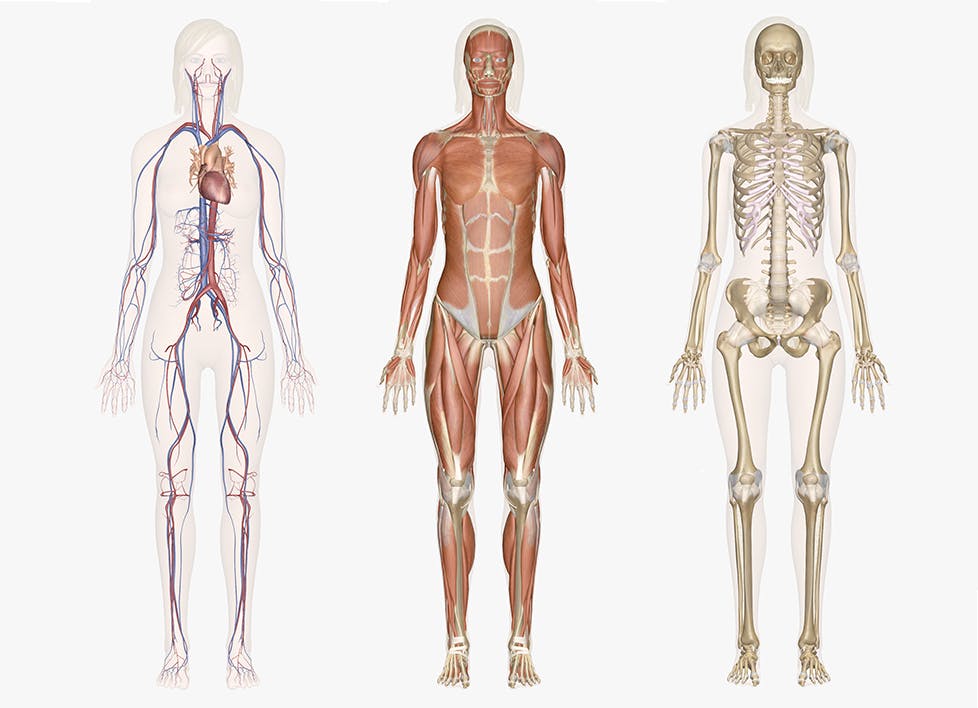
anatomy
noun
The branch of science concerned with the bodily structure of humans, animals, and other living organisms, especially as revealed by dissection and the separation of parts.
Example: He later became professor of anatomy at Kiel.
fr: anatomie
biochemistry
noun
The branch of science concerned with the chemical and physicochemical processes and substances that occur within living organisms.
Example: Her specialty is biochemistry.
fr: biochimie
biology
noun
The study of living organisms, divided into many specialized fields that cover their morphology, physiology, anatomy, behavior, origin, and distribution.
Example: Biology is sometimes quite hard to understand.
fr: biologie
biophysics
noun
The science of the application of the laws of physics to biological phenomena.
Example: He specializes in biophysics.
fr: biophysique
calculus
noun
The branch of mathematics that deals with the finding and properties of derivatives and integrals of functions, by methods originally based on the summation of infinitesimal differences. The two main types are differential calculus and integral calculus.
Example: I'm specializing in differential and integral calculus.
fr: calcul
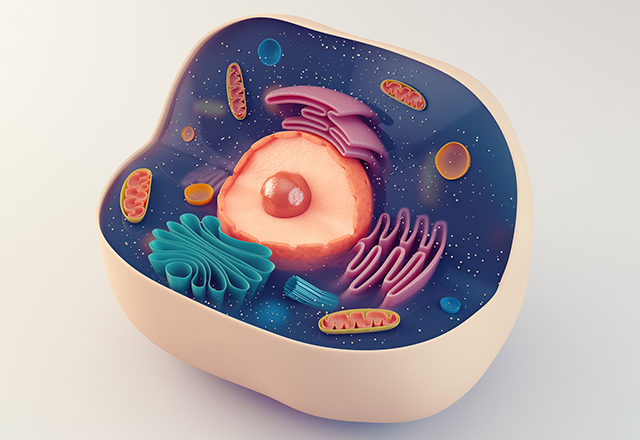
cell
noun
The smallest structural and functional unit of an organism, typically microscopic and consisting of cytoplasm and a nucleus enclosed in a membrane. Microscopic organisms typically consist of a single cell, which is either eukaryotic or prokaryotic.
Example: Embryos grow by cell division.
fr: cellule
chemistry
noun
The branch of science that deals with the identification of the substances of which matter is composed; the investigation of their properties and the ways in which they interact, combine, and change; and the use of these processes to form new substances.
Example: I have lost my interest in chemistry.
fr: chimie
electricity
noun
A form of energy resulting from the existence of charged particles (such as electrons or protons), either statically as an accumulation of charge or dynamically as a current.
Example: Copper conducts electricity well.
fr: électricité
engineer
noun
A person who designs, builds, or maintains engines, machines, or public works.
Example: After cegep, I'd like to go to university and become an engineer.
fr: ingénieur
experiment
noun
A scientific procedure undertaken to make a discovery, test a hypothesis, or demonstrate a known fact.
Example: The results of the experiment confirmed their predictions.
fr: expérience
experimentation
noun
The process of performing a scientific procedure, especially in a laboratory, to determine something.
Example: There was a period of experimentation with materials.
fr: expérimentation
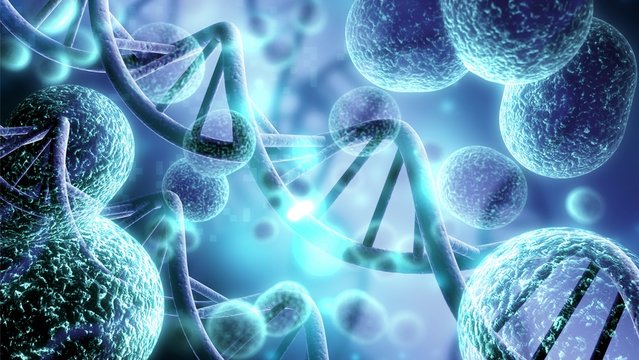
genetics
noun
The study of heredity and the variation of inherited characteristics.
Example: Dr. Washington is a specialist in genetics.
fr: génétique
mathematics
noun
The abstract science of number, quantity, and space. Mathematics may be studied in its own right (pure mathematics), or as it is applied to other disciplines such as physics and engineering (applied mathematics).
Example: Her favorite subject is mathematics.
fr: mathématiques
medicine
noun
The science or practice of the diagnosis, treatment, and prevention of disease (in technical use often taken to exclude surgery).
Example: I'll be studying medecine for at least 9 years at university.
fr: médecine
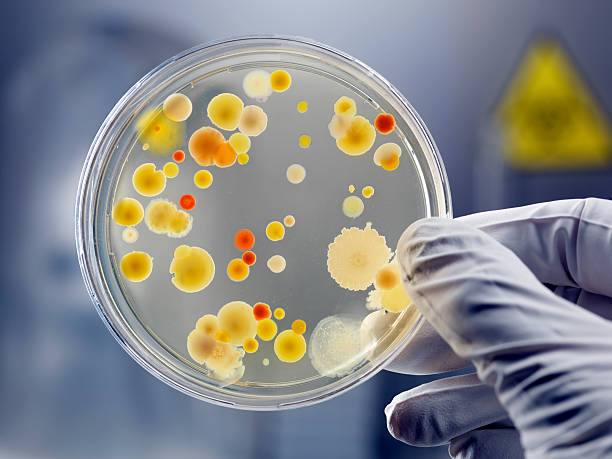
microbiology
noun
The branch of science that deals with microorganisms.
Example: The present writer has no experience in microbiology.
fr: microbiologie
molecule
noun
The simplest structural unit of an element or compound.
Example: The DNA molecule is compounded from many smaller molecules.
fr: molécule
physics
noun
The branch of science concerned with the nature and properties of matter and energy. The subject matter of physics, distinguished from that of chemistry and biology, includes mechanics, heat, light and other radiation, sound, electricity and magnetism.
Example: She studied physics at college.
fr: physique
physiology
noun
The branch of biology that deals with the normal functions of living organisms and their parts.
Example: He bought a book about physiology.
fr: Physiologie
research
noun
The systematic investigation into and study of materials and sources in order to establish facts and reach new conclusions.
Example: He is doing research on radiant intensity.
fr: recherche
science
noun
Science is the study of the nature and behaviour of natural things and the knowledge that we obtain about them. A science is a particular branch of science such as physics, chemistry, or biology.